
Payments & digital assets
Building a global digital wallet on Stellar
4
weeks to architecture and product concept
3
months from kickoff to public beta
Product engineering
From idea to launch, and everything after. A short definition phase sets the scope, architecture and launch date. Then one senior team designs, builds and launches your product, and stays to grow it.
Fixing a core system instead?
Start with an assessmentWhat we hear
What we hear
→ We review what exists, define a smaller MVP and commit to a plan before the full build.
What we hear
→ We plan backward from your date and protect it.
What we hear
→ A short definition turns them into a costed MVP with a launch date.
What we hear
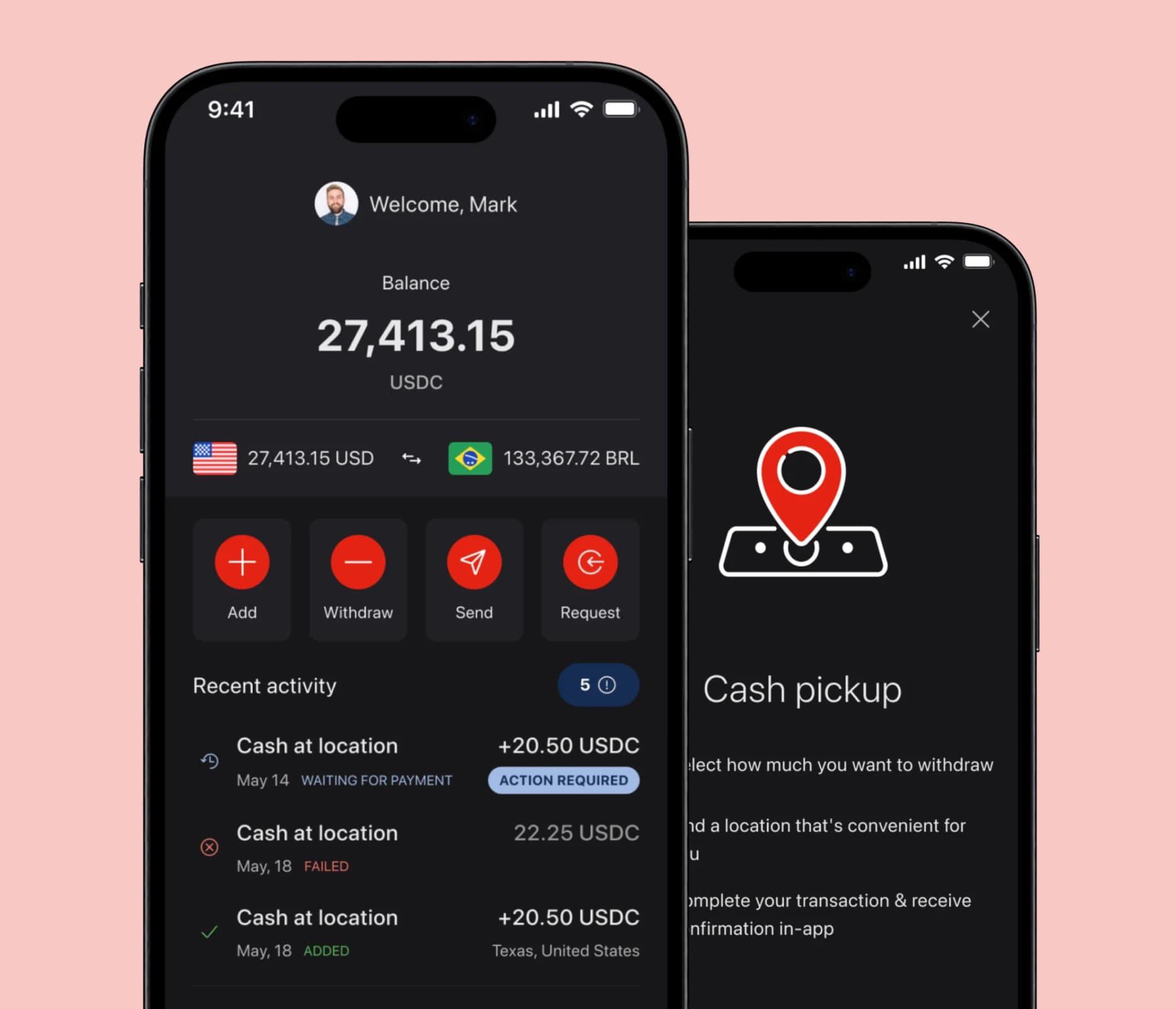
→ Wallets without seed phrases, sending to people who don’t have the app yet, cash in and out at physical locations.
What we hear
→ One delivery workflow across teams, with short, auditable SLAs.
What we hear
→ We research the AI landscape during definition, so you decide with evidence.
Most launches don’t slip in the build. They slip before it.
Define first
AI writes code in hours now. That moved the bottleneck: unclear requirements turn into rework just as fast. So every engagement starts by defining the smallest product that proves the idea, the architecture behind it and the date it launches.
How it works
Workshops with your executives and experts, on-site when possible. MVP scope and cuts, architecture, build-vs-buy choices, cost and launch date.
A proof of concept on the riskiest piece: a chain, a custody model or a key integration.
Design system, sprints, QA, DevOps, app-store submission and launch support.
A dedicated team keeps shipping after launch, on shared boards you can see.
Each phase is a separate decision, and scope only changes in writing.
Start here
In 2–4 weeks, you get the MVP scope, the architecture, a launch date and the cost. You decide what to build with evidence in hand.
What you receive
And what can wait.
How the product and its integrations fit together.
The experience your users will get, before the build.
Including the chain, if your product moves digital assets.
A dated plan, ready for your executives.
What AI can and can’t do in your market.
Capabilities
iOS, Android and cross-platform apps, through app-store release.
Web products and front ends on React and Next.js, with design systems that scale.
APIs, payments, KYC, subscriptions and partner integrations.
AI features with clear safety boundaries. Example: an AI companion that explains a user’s finances but never calculates or edits them.
QA, load testing, DevOps and security, built in from the first sprint.
Want AI running your operations rather than inside a product? See Deploy AI in operations
AI, with a person deciding
Each ticket becomes a versioned spec. AI builds from the spec, not from a loose prompt.
Automated tests, a multi-agent code review and a run in the browser or emulator produce evidence for each acceptance criterion.
A named reviewer approves every change, criterion by criterion, and the feature is checked again in staging before release.
| Criterion | Evidence | Reviewed by | Verdict |
|---|---|---|---|
| AC-01 Sign in with a passkey | E2E test · emulator run | Reviewer A | PASS |
| AC-02 Send to a contact without the app | E2E test · browser run | Reviewer A | PASS |
| AC-03 Show balance in local currency | Unit + visual test | Reviewer B | PASS |
| AC-04 Block transfer above daily limit | E2E test · staging | Reviewer B | IN REVIEW |
Every acceptance criterion gets evidence and a named approver before release.
How we deliver with AISpecialtyPayments & digital assets
We built MoneyGram’s non-custodial USDC wallet on Stellar, with recovery that doesn’t need seed phrases and cash in and out in 100+ countries.
Meridian Pay
The first open-source smart contract wallet on Stellar, with 1,000+ users registered in two days.
Mercado Bitcoin
A tokenization platform powering a stablecoin on Stellar.
Stellar Aid Assist
A blockchain aid platform used by UNHCR.
Vesseo
Transaction volume up 30%.
Payments & digital assets
4
weeks to architecture and product concept
3
months from kickoff to public beta

Build new software products
3x
faster task completion
5,000+
downloads
Here’s what MoneyGram has to say about working with us
“We feel like we’re one team instead of working with a different company.”
 Alicia SmithHead of Blockchain & New Fintech Products, MoneyGram International
Why us
One senior team owns definition through scale.
FAQ
Usually a short one. It turns your PRD into a costed MVP and cuts what can wait, which often lowers the build cost.
Yes, once scope is defined. The price changes only with a written scope change.
It depends on scope. You get a dated plan at the end of definition. For MoneyGram, that meant a public beta 3 months after kickoff.
We start by reviewing what exists, define the MVP with you, and commit to a plan with checkpoints before the full build.
Not always. We recommend it only where it adds value, such as settlement, stablecoins or self-custody, and we say so when it doesn’t.
With patterns we’ve shipped: recovery without seed phrases, passkey-secured smart wallets, and sending to people who don’t have the app yet.
Definition can include research on what AI can and can’t do in your market, so you decide with evidence.
A monthly support package, or a dedicated team that keeps shipping.