
Agentic AI is no longer a side feature or an experimental layer on top of existing products. It’s becoming the foundation underneath everything Google is building, and that changes the game for companies shipping software right now. On the same day Google opened I/O 2026, Andrej Karpathy, a founding member of OpenAI and former director of AI at Tesla, announced he was joining Anthropic to get back to frontier research.
Around the same news cycle, multiple outlets reported that Anthropic is preparing for a public listing as early as October, at a private valuation near 380 billion dollars. Talent and capital are pouring into this space at a pace I haven’t seen in my fifteen-plus years leading engineering teams.
That’s the backdrop, and it’s good news. It means the tools we build with keep getting better and more capable at a remarkable rate. Google I/O 2026 is the clearest proof yet, because this is where that momentum turned into products you and I can put to work right now.
The headline: Gemini 3.5 Flash, and a bet on one model for everything
The biggest announcement was Gemini 3.5, specifically the launch of Gemini 3.5 Flash. What stood out to me wasn’t just the benchmark numbers. It was Google’s confidence in the product. They skipped the usual preview cycle entirely and shipped it directly into production across the Gemini app, Search, and the developer platform.
It earns that confidence. On Google’s own benchmarks, 3.5 Flash beats the larger Gemini 3.1 Pro on coding and agentic tasks, posting 76.2 percent on Terminal-Bench 2.1 and 83.6 percent on MCP Atlas, while running about four times faster than other frontier models on output speed. A “Flash” model outperforming the previous generation’s “Pro” model is the headline. The old trade-off between fast and smart is mostly gone.
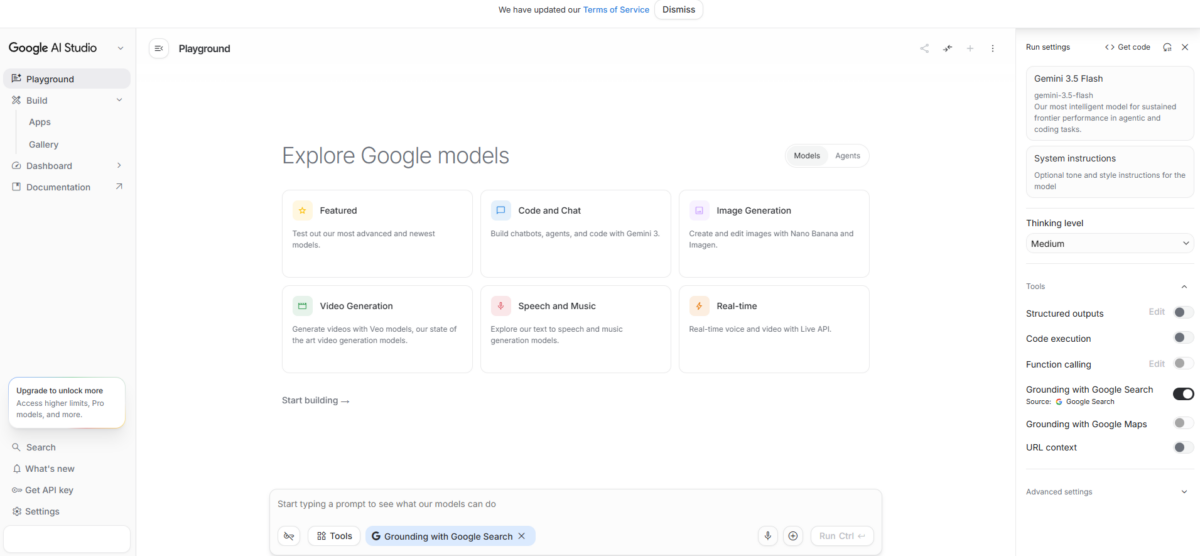
Try to use Gemini 3.5 Flash on Google AI Studio!
Google is sure enough of that to make 3.5 Flash the default model behind the Gemini app and AI Mode in Search for everyone, and it’s also what developers get through the Gemini API and the new Antigravity platform.
One model, consumer to enterprise, serving a Gemini app that has grown to more than 900 million monthly users, up from 400 million a year ago. A larger 3.5 Pro ships next month. For anyone building AI features, the ceiling just went up.
Read the price tag the right way
Yes, 3.5 Flash costs more per token than the Flash models before it, and that got some attention. But raw token price is the wrong lens. The number that matters is capability per dollar, and on that measure builders just came out ahead.
Here’s why. When one fast model is genuinely good at multi-step work, you stop stitching together fragile pipelines of cheaper models, retries, and hand-written orchestration to get a reliable result. A capable model that gets it right the first time, quickly, often costs less to run end to end than a cheap model that needs three attempts and a fallback.
We see this constantly when we build AI features for clients at Cheesecake Labs. The expensive part is rarely the tokens. It’s the engineering you wrap around an unreliable model, and 3.5 Flash shrinks exactly that.
The practical move is simple, and it’s good engineering regardless of the pricing: match the model to the job, send routine calls to smaller models, use the frontier tier where it pays for itself, and measure cost per outcome rather than cost per token. Do that, and a more capable default is a gift, not a bill.
“Agentic” stopped being a buzzword
Sundar Pichai framed the whole event as the start of “the agentic Gemini era,” and this time the substance backed the slogan. The Gemini app didn’t get an agent feature. It became an agent itself.
The clearest example is Gemini Spark, a personal AI agent that runs around the clock, keeps working after you close your laptop, and gets real things done across Gmail, Docs, and a growing set of third-party tools through MCP connections to apps like Canva, OpenTable, and Instacart.
It begins rolling out in beta to Google AI Ultra subscribers in the US next week. There’s also Daily Brief, which builds a prioritized morning digest from your inbox and calendar, and Android Halo, which keeps you informed of what your AI agent is doing right from the top of your phone screen.
I/O 2026 went much wider too, from Gemini Omni for video generation to Android XR glasses, and the through-line never changed: software that does real work for you.
What I like about Google’s approach is that it’s built around your direction, not around taking you out of the loop. Spark acts on your behalf, asks before high-stakes steps like spending money or sending email, and keeps you informed as it goes. That’s the right model for AI agents, and it’s a pattern worth copying. It also reframes the work for builders in a good way.
The interesting questions now are which workflows are worth handing to an agent first, and how to design the experience so people trust it and stay in command. Those are product questions, and they’re landing on our desks at exactly the right time.
Read more: AI Agents vs AI Systems for Software Architecture
Antigravity, and why consolidation is good news
The announcement that got less attention is one I’d put in front of every engineering leader, and it’s encouraging. Google is bringing its developer tools together under Antigravity, its agent-first development platform. Antigravity 2.0 and a new Antigravity CLI are available now, and the standalone Gemini CLI is being folded into it, with the transition for individual users completing on June 18.
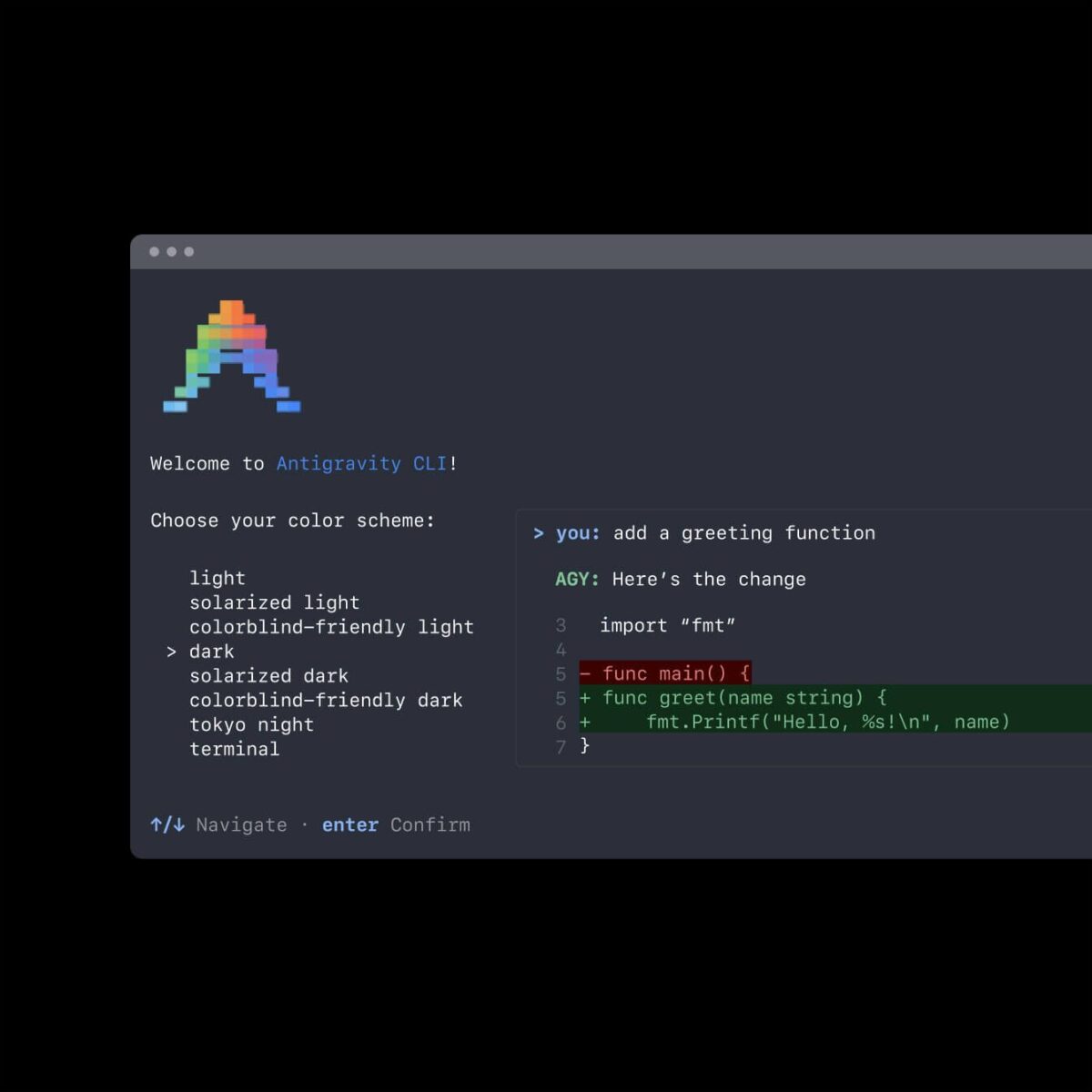
Gemini CLI launched less than a year ago and was a real success, with more than 100,000 GitHub stars. Google is unifying it into Antigravity anyway, because developer workflows moved from single-agent to multi-agent quickly, and one platform serves that far better than a scattered set of tools.
That’s a healthy signal. It means the agentic developer stack is maturing fast enough that Google is ready to consolidate around it. The takeaway for our teams is adaptability, and it’s a strength we can lean into: keep your prompts, skills, and workflows portable, treat the tooling layer as something that will keep improving, and you get to ride every upgrade instead of being caught off guard by it. The teams building that way have been thriving all the way through this cycle.
What I’d actually do with this
So what do you do with a week like this one? Not wait. My read after I/O 2026 is straightforward, and it’s optimistic.
The capability is real, it’s shipping to roughly a billion people, and it’s more practical to build with well than it was a year ago. The teams that pull ahead in 2026 will be the ones that treat agentic AI as a now project: pick one workflow where an agent can carry real weight, build it, put it in front of users, and learn faster than everyone still debating. Speed of learning is the advantage here, and it compounds.
That’s the work we love at Cheesecake Labs. We help product and engineering teams move from the announcement cycle to shipped, dependable agentic features, with the design, speed, and quality that turn a promising demo into a product people rely on.
If I/O 2026 has you thinking about where agents fit in your roadmap, that’s the right instinct, and it’s a great time to act on it. Schedule a call with our team, and let’s build your next move together.