
AI applications are undergoing a foundational transformation. Where we once relied on static, pipeline-driven AI Systems—like recommendation engines or classifiers—we’re now seeing a shift to AI Agents: dynamic, autonomous entities capable of perceiving, reasoning, and acting based on real-world context.
This shift mirrors changes in software architecture: from predictable workflows to autonomous orchestration loops. Let’s explore the architectural and implementation-level differences between these two paradigms, and what it means to build truly intelligent systems.
Differences between AI Systems and AI Agents
| AI Systems | AI Agents | |
| Purpose | Task-specific automation (e.g., chatbots, recommendations) | Autonomous problem-solving (e.g., scheduling, negotiation) to achieve goals |
| Autonomy | Low Requires explicit prompts/inputs | Low → High Makes decisions with a configurable amount of human input |
| Learning | Passive Improves via user feedback and retraining (e.g., A/B tests) | Active Self-improves through environmental interactions |
| Interaction | Question-Answer Retrieves info from specified data sources | Objective-Oriented Executes tasks (API calls, edits) |
| Use Cases | • Customer support bots • Recommendation engines | • Autonomous supply chain • Personal assistants |
| Example | Netflix recommendation algorithm | Amazon delivery route optimization |
Core Architectural Differences
Traditional AI systems are highly performant at specific tasks, but they’re static—they don’t change their behavior based on new context.
Agents, on the other hand, evolve with data, learn from feedback, and actively choose how to solve problems.
| Feature | AI Systems (Traditional ML / LLM Single-Pass) | AI Agents |
| Architecture Type | Pipeline or microservice | Modular, loop-based agent framework |
| State | Stateless | Stateful |
| Control Flow | Linear, manual | Dynamic, feedback-driven |
| Memory | None / input-bound context | Persistent, evolving memory (e.g. vector DBs) |
| Tool Use | Fixed functions or no integration | Adaptive tool use via APIs and plugins |
| Autonomy | Task-driven | Goal-driven |
| Integration | API endpoints or embedded services | Context-aware orchestration (MCP, tools) |
| Examples | Recommendation engines, fraud detection, translation | Research assistants, autonomous RAG systems, workflow bots |
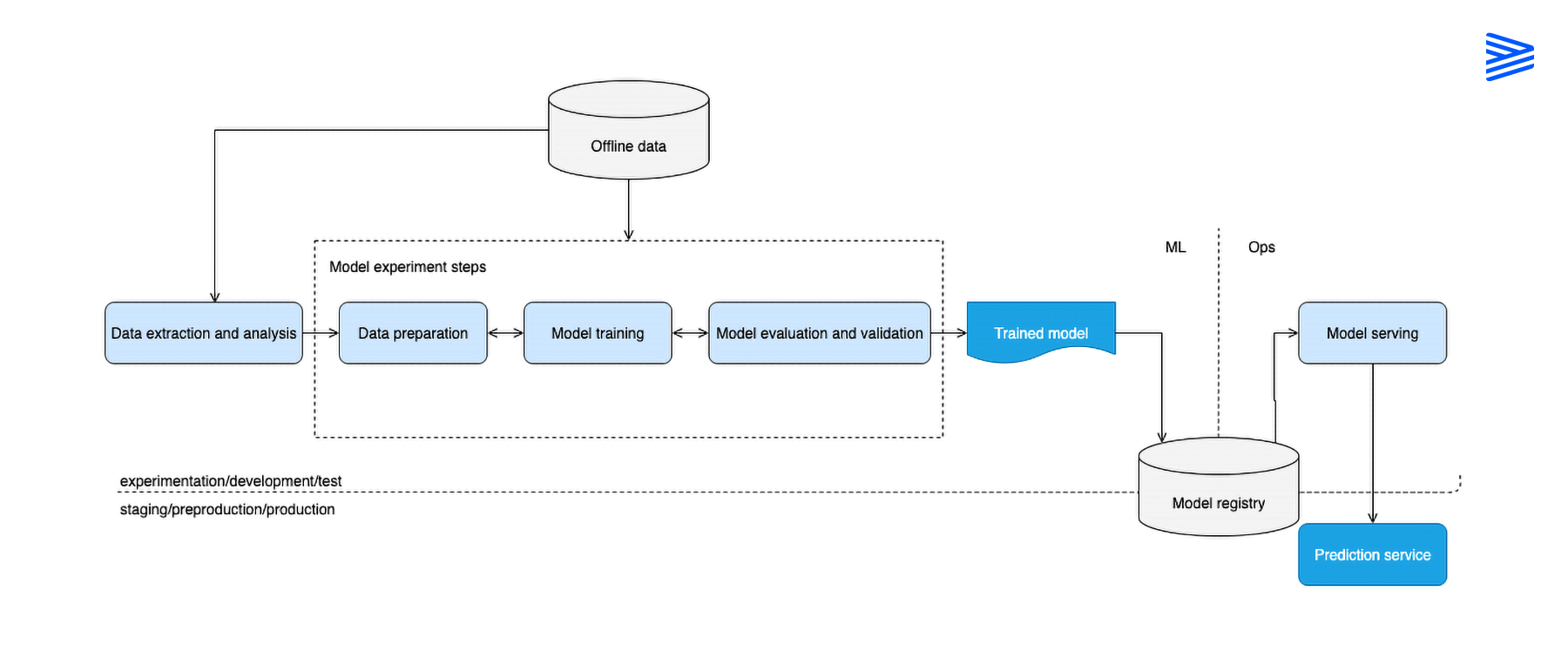
Implementation of AI Systems
Typical Architecture
- Input: Structured input (user features, session data, text)
- Processing:
- Classic ML models (e.g., XGBoost, logistic regression)
- Neural nets for embeddings or scoring
- Single-call LLMs for classification/Q&A
- Output: Prediction, recommendation, class label, score
- Deployment: Packaged as APIs or microservices
Use Cases
- Recommendation engines using collaborative filtering or embeddings
- Churn prediction or fraud detection
- Sentiment classifiers or NER pipelines
- One-shot LLM queries like translation or summarization
Infrastructure Characteristics
- Deployed as REST endpoints or batch pipelines
- Model lifecycle: train → validate → deploy → monitor
- Doesn’t handle perception, decisions, or action orchestration
- Often embedded in larger non-AI applications
Implementation of AI Agents
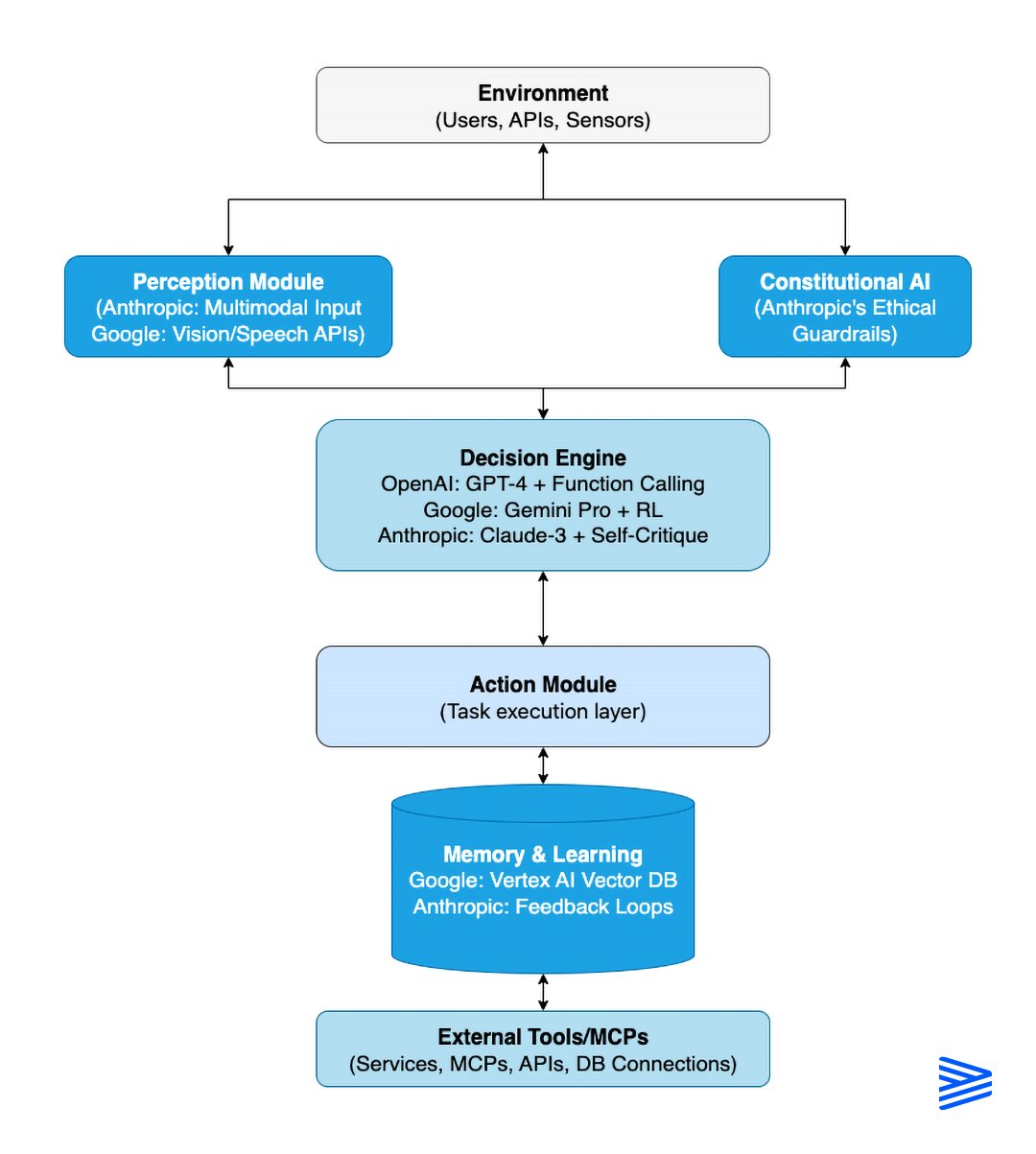
Agents introduce a looped control architecture where reasoning is interleaved with perception and action.
Modular Agent Architecture
1. Environment Interaction
- Pulls real-time data via APIs, user input, file systems, or sensors
- Enables agents to “sense” their operating context
- MCP (Model Context Protocol) simplifies and standardizes this connection
2. Multimodal Perception
- Converts raw signals (text, voice, images) into embeddings or structured insights
- May include OCR, speech-to-text, CLIP/BLIP for visual input
3. Decision Engine
- Core reasoning module: usually an LLM
- Enhanced by:
- Retrieval-Augmented Generation (RAG) from a vector DB or graph
- Business logic or guardrails (e.g., Constitutional AI)
- Planning to generate multi-step strategies
4. Action Execution
- Calls external APIs, sends emails, triggers automation tools
- MCP (Model Context Protocol) simplifies and standardizes this connection
- Often abstracted as “tools” or “functions” selected dynamically
- Can include integrations with calendars, document editing, or robotic interfaces
5. Memory & Learning
- Long-term: stores semantic context (e.g., conversation history, embeddings)
- Short-term: working memory for current task
- Uses vector databases for similarity search and memory retrieval
- Feedback loops allow continuous tuning and self-improvement
6. Integration Layer
- MCP abstracts and manages access to tools and data sources
- Facilitates plug-and-play integration without writing custom wrappers
- Makes agents tool-agnostic and composable
Workflow Patterns for Agents
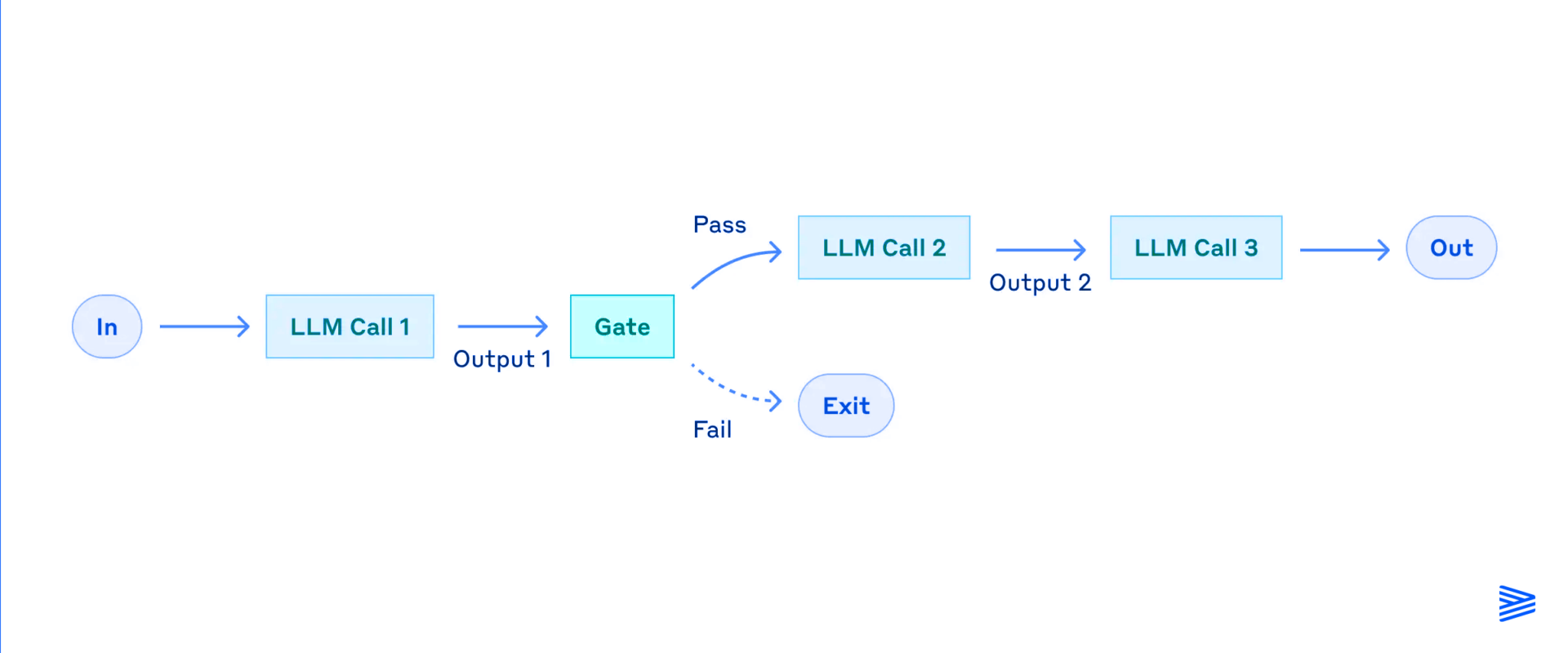
1. Prompt Chaining
Decomposes a task into sequential LLM calls. Each step’s output feeds the next. Useful for step-by-step reasoning, programmatic checks, or validation stages.
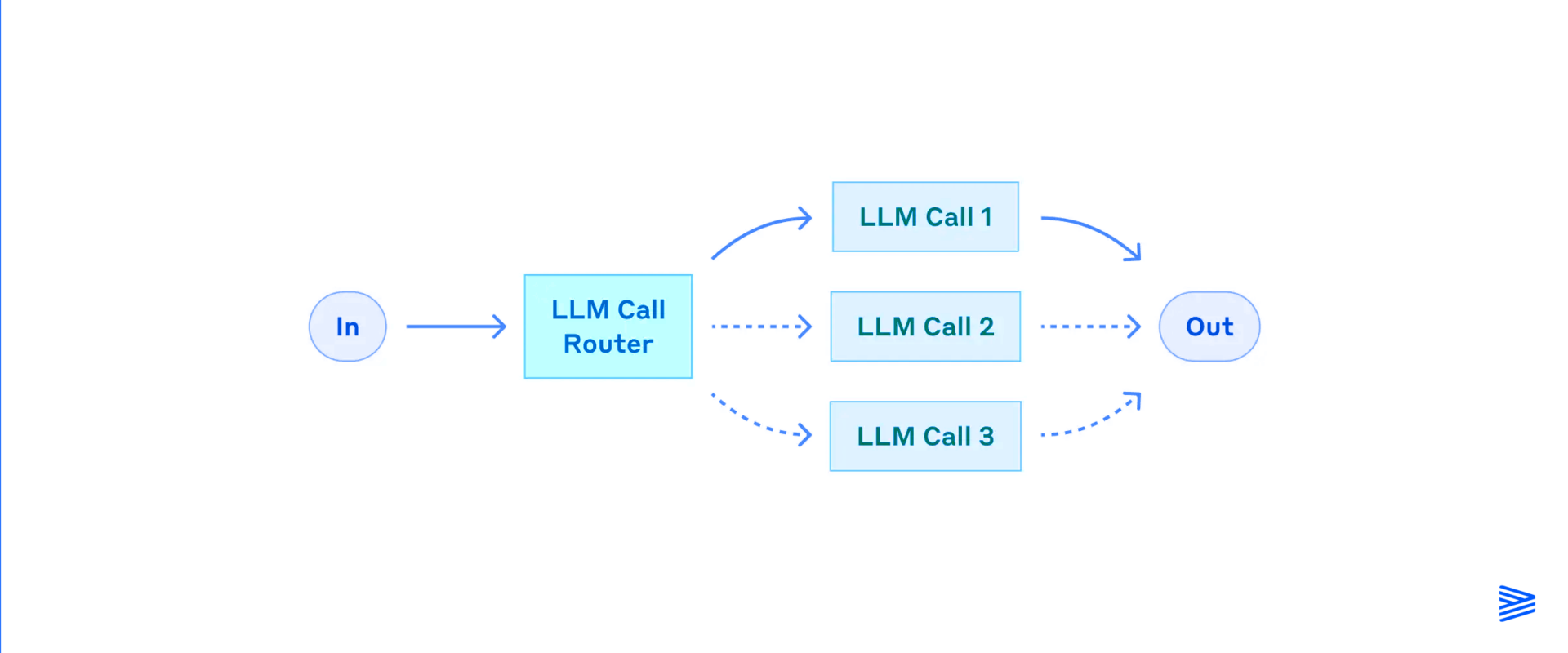
2. Routing
Classifies user input and routes it to specialized agents, prompts, or tools. Common in multi-skill agents (e.g., scheduling, research, support).
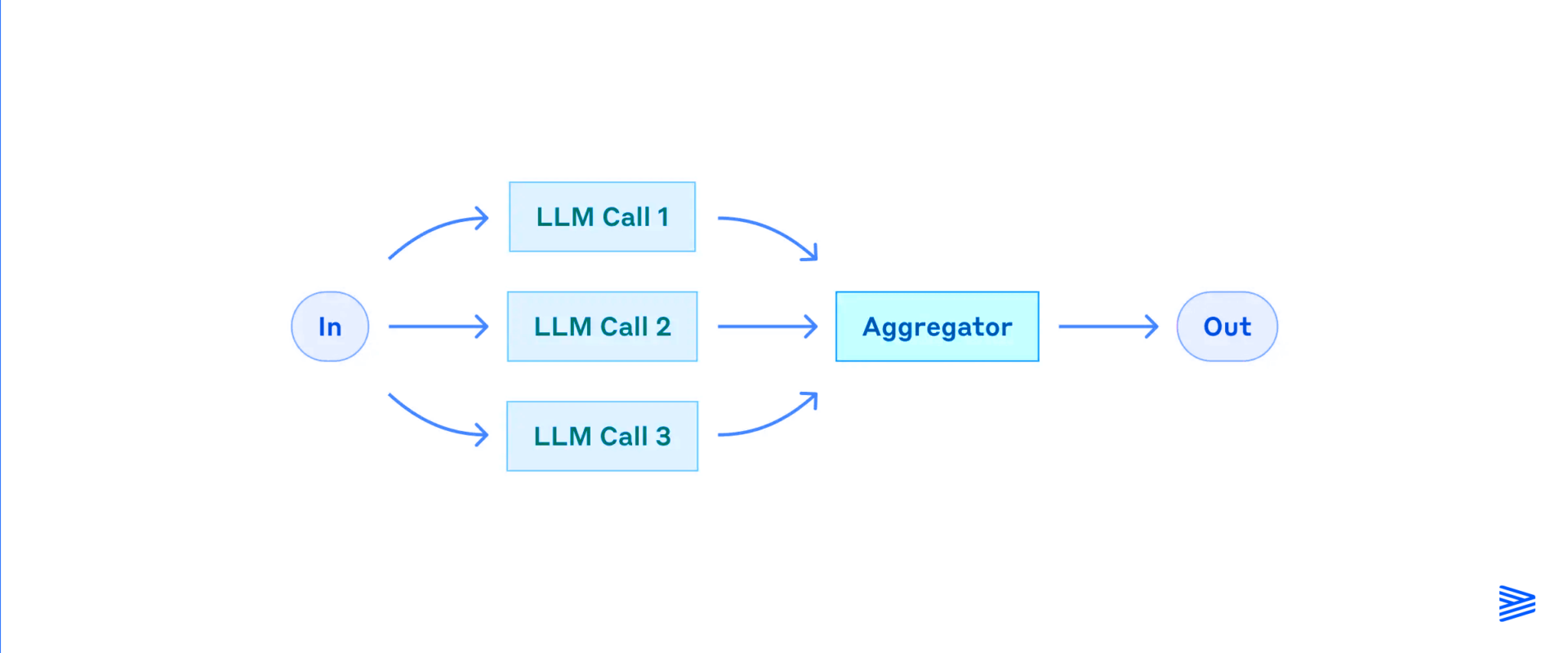
3. Parallelization
Executes tasks concurrently:
- Sectioning: Break one task into parts (e.g., summarize chapters independently)
- Voting: Run multiple generations and select via scoring or majority
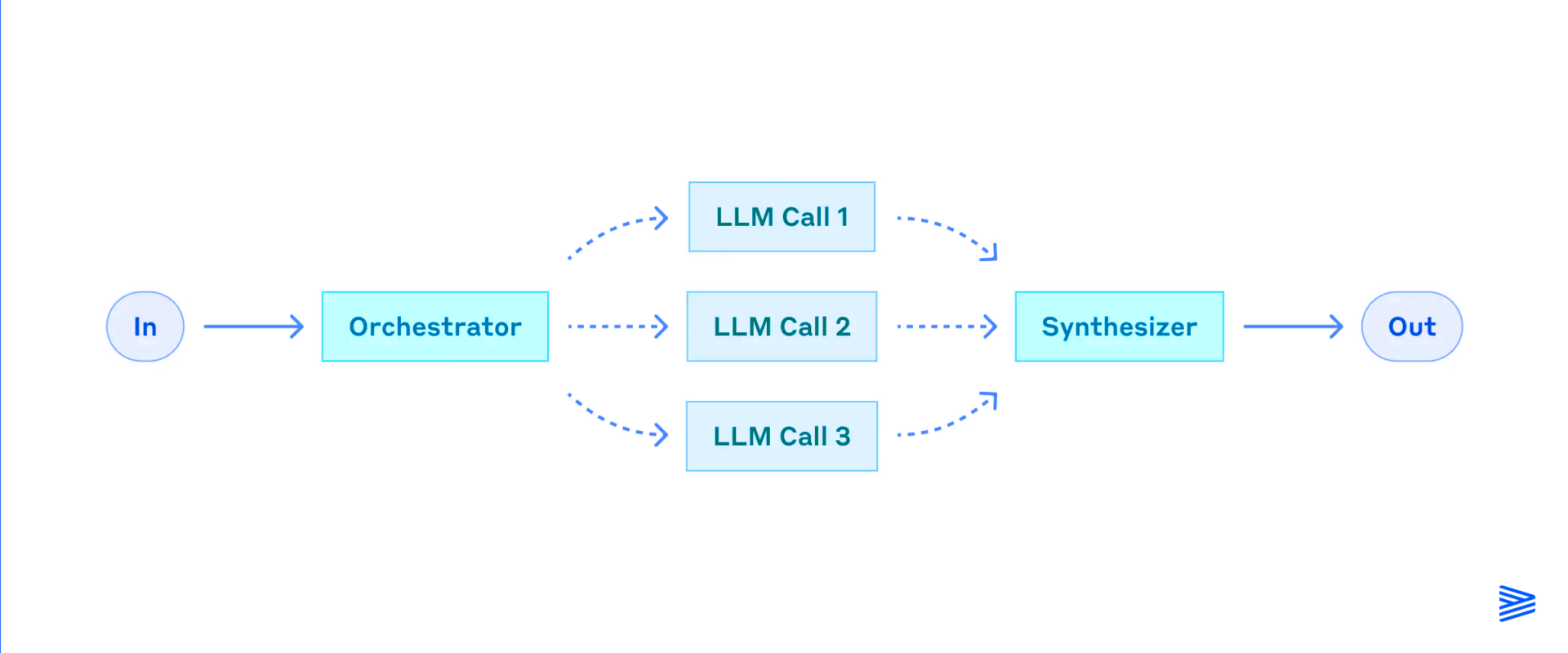
4. Orchestrator-Worker Pattern
A central agent plans and delegates subtasks to sub-agents. Useful for complex tasks like report generation, planning, or multi-modal coordination.
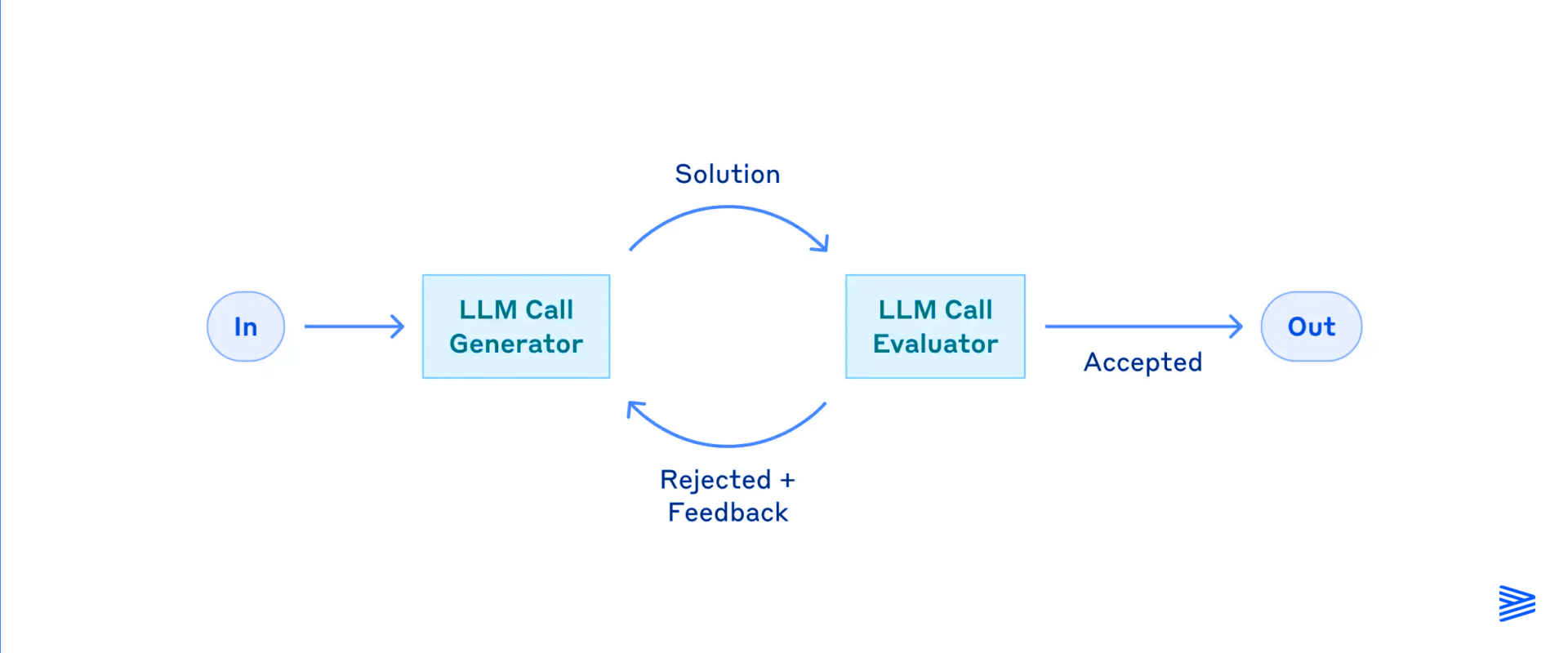
5. Evaluator-Optimizer Loop
Pairs a generator agent with a reviewer agent. Output is iteratively improved using feedback. Common in research, ideation, or product copy workflows.
Implementation Challenges and Solutions for Agents
1. State Management
Challenge: How to persist and retrieve relevant context efficiently
Solution: Vector DBs (e.g., Pinecone, Weaviate) with metadata filtering; session managers or short-term caches
2. Tool Integration
Challenge: Integrating with dozens of APIs is fragile and costly
Solution: MCP abstracts tools into interoperable “servers”; allows rapid scaling without glue code
3. Error Handling and Self-Correction
Challenge: Agents can hallucinate, fail, or loop infinitely
Solution:
- Guardrails & checks at each stage
- Redundancy and majority voting
- Evaluator-agent feedback loop
- Monitoring and traceability frameworks
4. Cost & Latency Optimization
Challenge: Multi-step workflows are resource-intensive
Solution:
- Hybrid agents (use smaller models for sub-tasks)
- Caching intermediate results
- Defer or batch non-critical actions
- Fine-tune on narrow domains to reduce token usage
AI Agents are not simply “better” AI Systems—they’re a different species altogether. They bring autonomy, adaptability, and memory to intelligent systems. But they also demand careful architectural planning, modular workflows, and robust infrastructure.
As Model Context Protocols, vector databases, and multi-agent orchestration patterns mature, AI development will increasingly resemble the design of intelligent organizations—where software doesn’t just serve, but decides, acts, and evolves.

References
AI Agents: Evolution, Architecture, and Real-World Applications
Model Context Protocol (MCP): Landscape, Security Threats, and Future Research Directions
AI Agents vs. Other AI Systems: Definitions and Distinctions