From Senior to Staff Engineer: The Skill That Changes Everything
Antony Ferreira | Jun 26, 2026

In this article you will get to know what is React Suspense, how to use this feature and what to expect from the future of the SPA’s (Single-page application) from my point of view.
In the last JsConf at Iceland, Dan Abramov showed us a new feature called Suspense, where you can manage asynchronous requests and more – if you didn’t watch the presentation, you can do it right now:
Suspense is the experimental feature announced by Dan Abramov that helps us to manage asynchronous operations. It is able to defer rendering data respecting the CPU power and data fetch, allowing more scalability and performance.
Considering it, there is a new structure based on cache where you can store your data, and access it as well, using the cached data as resource.
To use this feature you only need to install the dependence:
npm install simple-cache-provider
And call some important methods:
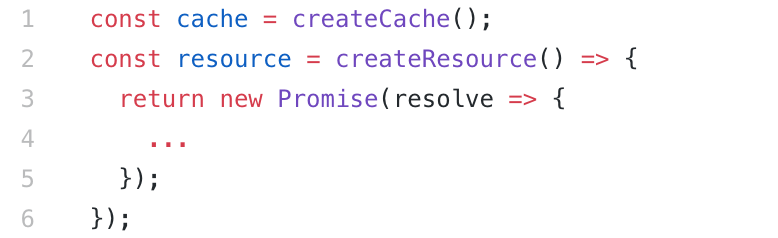
In this case, we need to create a storage (createCache) – to store your data, of course – and then to create a resource (createResource), like a service to do asynchronous operations. This way, the component will never be shown until your data is loaded. This is enough to define a structure that is able to manage data cached and fetches with a suspense possibility.
However I might have a more practical demo to present you:
I hope a big change with data organization in front-end. Today we have the Redux, a powerful solution to manage data, but with the simplicity of suspense and its cache provider it may promote Redux’s death.
I would consider this way because the first contact with it is easier than with Redux. Also because it is an alternative package that gives you good scalability and performance.
Maybe we are living a new era to architect data in front-end and this is the opportunity to recreate this pattern to another technologies component-based, like vue.js, angular and more.
Don’t forget this is an experimental feature, so don’t worry about using it in production environment yet.
And, of course have fun while using this tool. I hope you feel more productive and satisfied with the result. 🙂
https://blog.logrocket.com/async-rendering-in-react-with-suspense-5d0eaac886c8
https://medium.com/@baphemot/understanding-react-suspense-1c73b4b0b1e6
https://blog.pusher.com/time-slice-suspense-api-react-17/
https://medium.com/@ryanflorence/the-suspense-is-killing-redux-e888f9692430
React Suspense is an experimental feature announced by Dan Abramov that helps manage asynchronous operations. It is able to defer rendering data respecting the CPU power and data fetch, allowing more scalability and performance.
It uses a new structure based on cache where you can store your data and access it, using the cached data as a resource.
You need to install the dependency with 'npm install simple-cache-provider' and then use methods like createCache to create a storage for your data and createResource to perform asynchronous operations. This way, the component will not be shown until the data is loaded.
From the author's point of view, the simplicity of Suspense and its cache provider may promote Redux's death, since the first contact with it is easier than with Redux and it offers good scalability and performance as an alternative package.
No. It is an experimental feature, so it should not be used in a production environment yet.