
Users don’t connect with digital products just because they work. They connect with products that convey a sense of clarity, trust, and care. Performance and organization are essential, but the emotional response is often the factor that determines whether the experience will be enjoyable, memorable, and adopted in the long term.
In this article, we explore how to create more engaging experiences based on the principles of Emotional Design, a concept created by Donald Norman, combined with UX heuristics by Jakob Nielsen. To make the content more concrete, we use the Fazenda Guanabara project as an example.
Fazenda Guanabara is a large-scale cattle operation focused on reproductive efficiency and the production of high-quality calves. The operation uses technologies such as artificial insemination, crop-livestock integration, professional consulting, specialized management practices, and workforce training programs.
Our project consisted of developing a digital system that supports this entire operational flow, from management to results tracking. The goal was to transform complex, high-volume processes into a clear, efficient, and intuitive digital experience for different user profiles.
What is emotional design?
Emotional Design studies how people perceive and respond to products not only from a functional perspective but also from an emotional impact perspective. The goal is to design experiences that are efficient, enjoyable, and capable of generating trust and satisfaction over time.
To apply this concept in practice, we use a structured method divided into three levels.
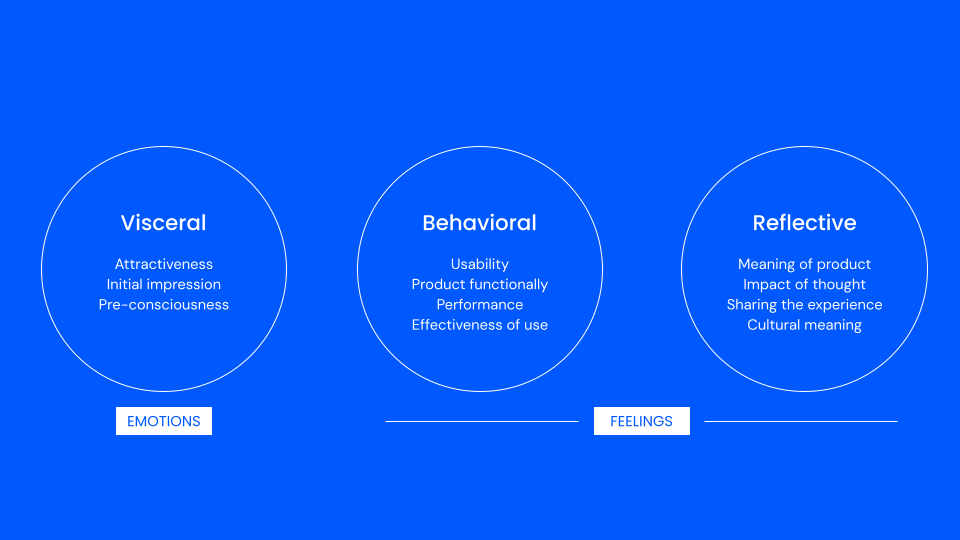
1. Visceral
The visceral level concerns the user’s immediate reaction upon encountering the interface. This response is fast, intuitive, and emotional, influenced by elements such as colors, typography, sounds, materials, textures, motion, and visual organization. It is the layer responsible for the initial attractiveness and instant understanding of the product’s purpose, even before any conscious interaction.
- Attractiveness
- First impression
- Pre-conscious processing
2. Behavioral
The behavioral level involves how the user feels while using the product. This is where usability, efficiency, and clarity come in. It is the layer that considers the predictability of interactions, the logic of flows, ease of learning, and interface performance. In other words, it determines whether the product works well, whether it is intuitive, and whether it allows users to complete tasks with confidence.
- Usability
- Product function
- Performance
- Effectiveness of use
3. Reflective
The reflective level is the most subjective and is related to how the user interprets the experience before, during, and after using it. It includes perceived value, trust, satisfaction, and even how using the product impacts the user’s self-image.
In a software development context, this is the layer over which we have the least direct control, but it’s influenced by the sum of the others, and good reflective design creates meaning and strengthens the bond between product and user.
- Product meaning
- Cognitive impact
- Experience sharing
- Cultural significance
How do we connect Emotional Design and UX heuristics?
We connect them by using Nielsen’s heuristics to turn Emotional Design insight into practical interface decisions: the three levels provide a lens to understand how people perceive a product, and the heuristics provide the foundation for the interface choices that follow. Combining both approaches helps create experiences that are emotionally engaging and technically consistent.
Below, we show how these concepts complement each other.
Visibility of system status with a behavioral focus
Users should always know what is happening. This reduces uncertainty and improves the perception of control. Common applications include:
- Clear loading states
- Precise alerts and status messages
- Animations that indicate context changes
Consistency and aligned standards
When visual and behavioral elements follow a clear logic, the product conveys maturity and trust.
Common applications include:
- Logical use of semantic colors
- Components with uniform and consistent behavior
- Common usage flows across the system
Error prevention with a behavioral focus
Interfaces that prevent errors reduce frustration, increase efficiency, and strengthen trust in the system.
Common applications include:
- Microinteractions that indicate the state and required action
- Progressive validations
- Transitions that clarify impacts before completing an action
How did we apply these principles in the Fazenda Guanabara project?
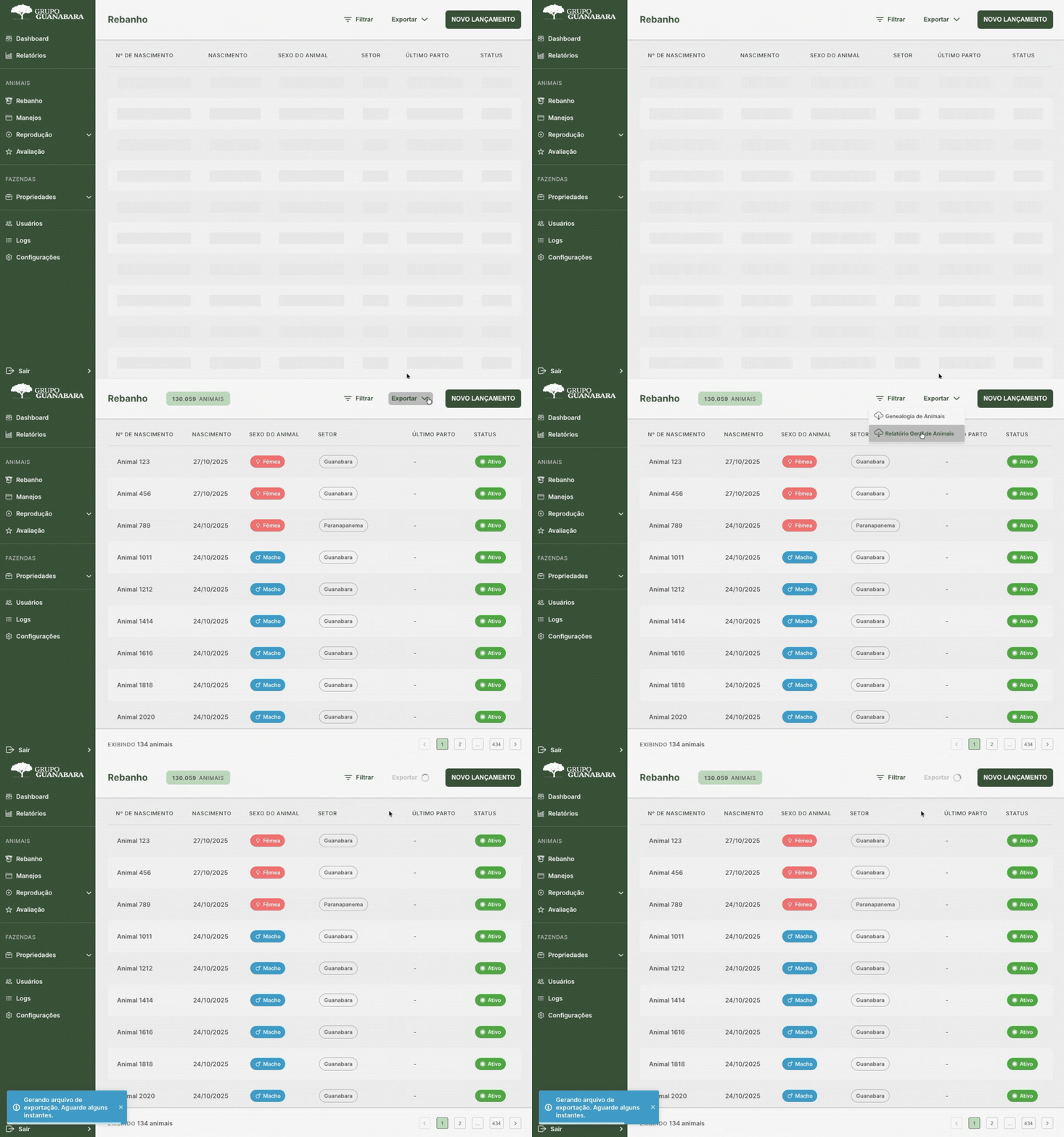
We applied them in three ways in the Fazenda Guanabara system: clearer feedback for long operations, targeted microinteractions that confirm actions, and purposeful animations that make processing time legible. After establishing the conceptual foundation, we translated these principles into design and implementation decisions within the system.
Clear feedback
Before the intervention, the system handled long and critical operations, such as management records, spreadsheet imports, and synchronizations between modules. These actions often involved large volumes of data and did not provide immediate feedback to the user.
In practice, this created uncertainty: users did not know whether the action had been completed, was still processing, or if something had gone wrong. In an operational context, this uncertainty increases errors, repeated actions, and distrust in the system.
To solve this, we redesigned messages, alerts, and loading states with a focus on visibility of system status, one of Nielsen’s core heuristics. We introduced clear, progressive, and contextual feedback, making explicit what was happening, why it was happening, and what the user could expect next.
The result was a more predictable and secure experience, reducing doubts, rework, and the feeling of losing control during use.
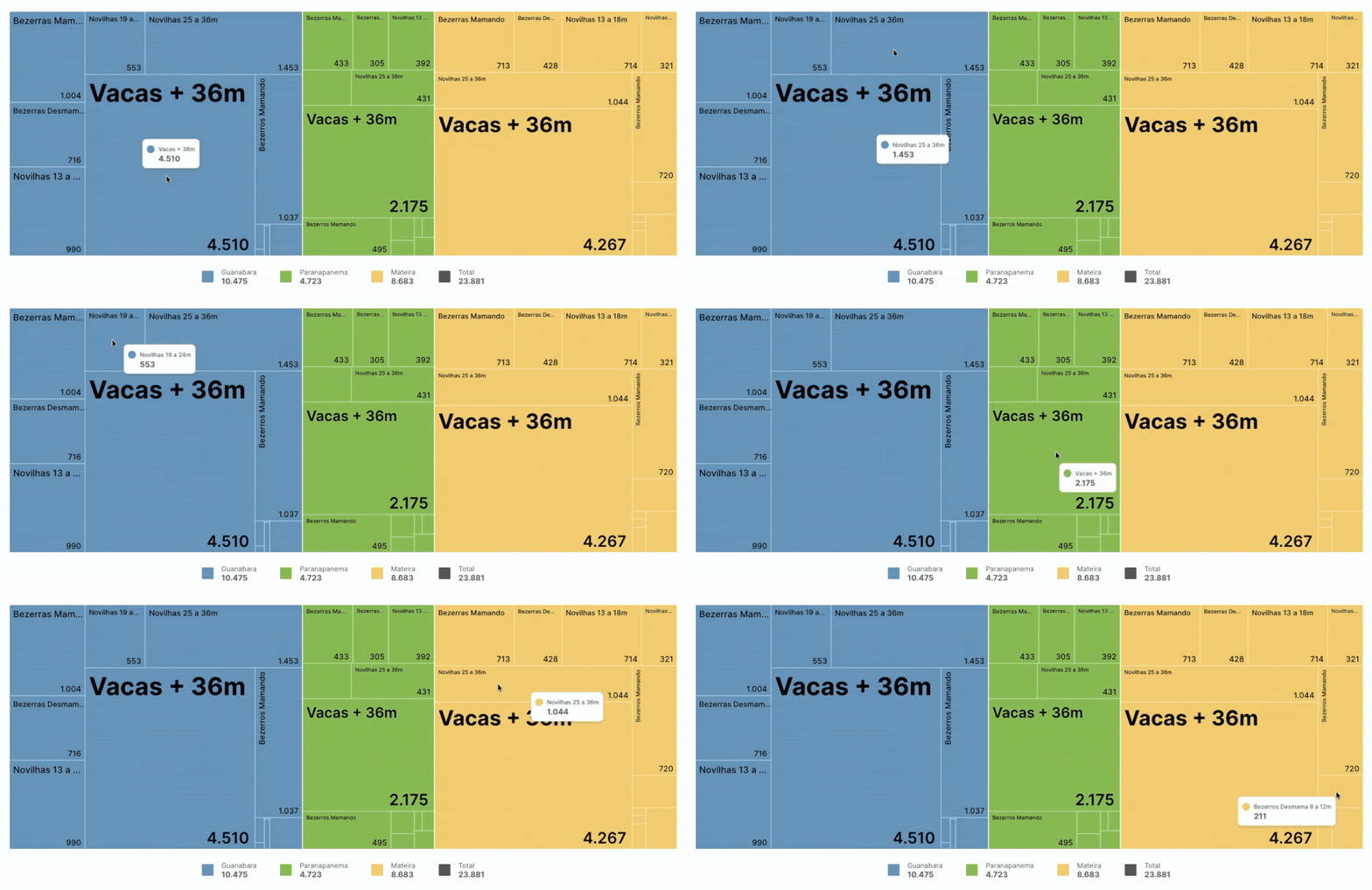
Microinteractions
In earlier versions of the system, many important actions happened silently. Fields changed state, and records were saved or invalidated, but without clear confirmation or guidance signals. This required users to “guess” whether their action had any effect, increasing cognitive load and the likelihood of operational errors.
We applied targeted microinteractions such as subtle state changes, short animations, and visual indicators to communicate actions, consequences, and next steps. The goal was not to decorate the interface, but to reduce mental effort and increase confidence during use.
These microinteractions reinforced the behavioral level of Emotional Design, making the system more readable and predictable, especially for users dealing with repetitive workflows throughout the day.
Purposeful animations
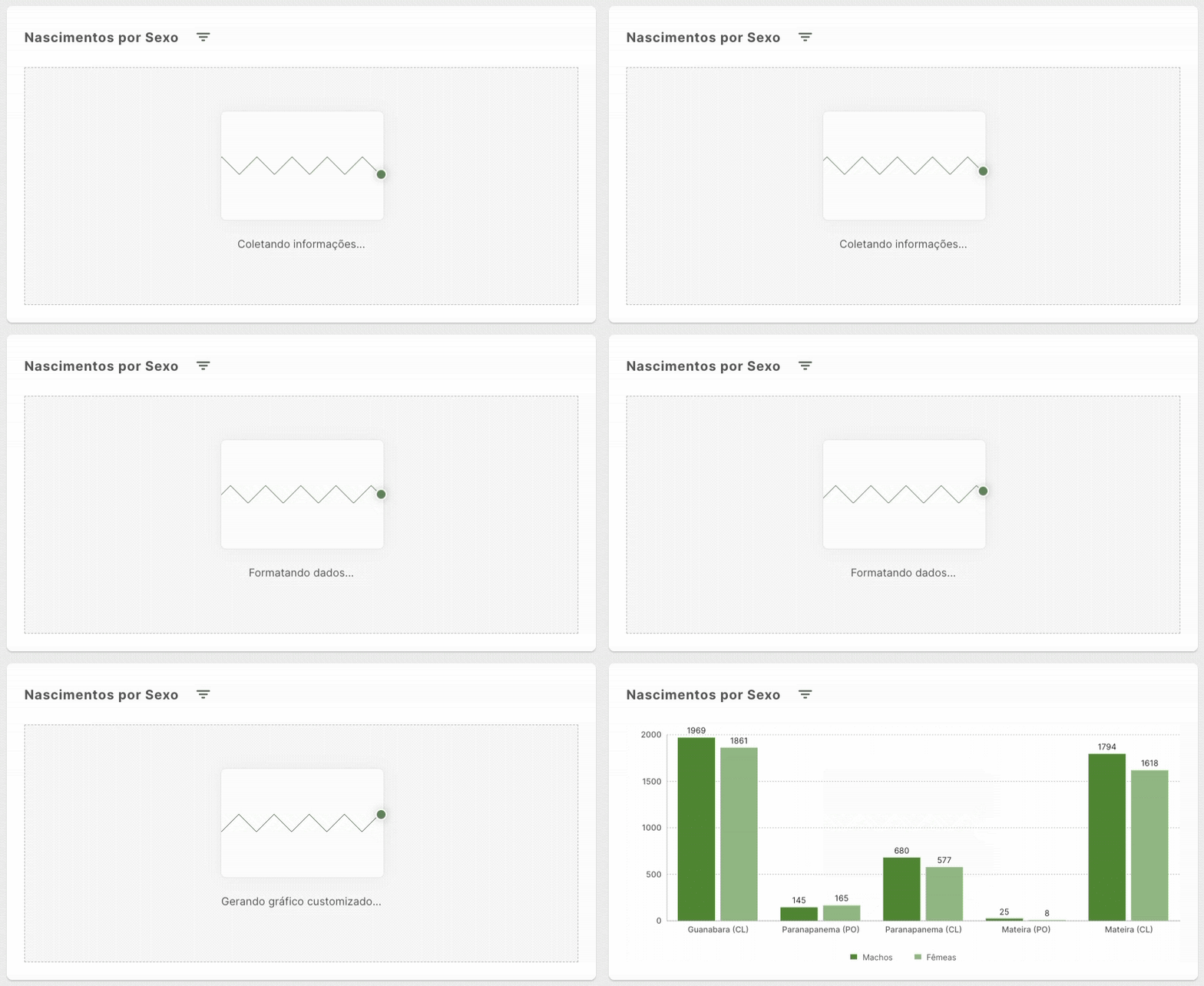
Some actions in the Fazenda Guanabara system require intensive data processing, such as record consolidation, data cross-referencing, and updating multiple interface states. These operations are not instantaneous, and they should not feel like they are.
Without proper feedback, this type of action creates uncertainty: users do not know whether the system is processing, frozen, or has failed. To avoid this perception, we used animations in an intentional and functional way, signaling that the action was received and that processing is in progress.
We applied smooth transitions, progress indicators, and gradual state changes to make waiting time understandable and maintain the perception of control during heavier operations. The goal was not to mask latency, but to make it legible.
As a result, the system communicates its behavior more clearly, reducing anxiety and strengthening user trust throughout the flow.
Why does Emotional Design matter?
Emotional Design is not a decorative element. It is an approach that helps create products that make sense to users, simplify daily tasks, and build long-term trust. When we combine the three levels of Emotional Design with Nielsen’s heuristics, we create products that are at the same time intuitive, efficient, and enjoyable.
However, applying Emotional Design in digital products only works well when design and engineering operate in an integrated way. Elements such as microinteractions, transitions, loading states, and feedback need to be designed together to balance aesthetics, clarity, and technical feasibility. Without this collaboration, it is common for solutions to look good in design but fail in execution, or for technical constraints to limit the intended impact.
Co-creation between design and engineering enhances both the process and the outcome of a project. Both areas gain a better understanding of context, adjust decisions more quickly, and find more efficient ways to bring interactions to life.
In complex projects like Fazenda Guanabara, this synergy ensures that Emotional Design does not remain theoretical but becomes a clear, fluid, and reliable experience for users.
Creating products users love means combining functionality, emotion, and context of use into a cohesive experience from start to finish. It is this combination that transforms a system into something people truly trust, understand, and enjoy using.